
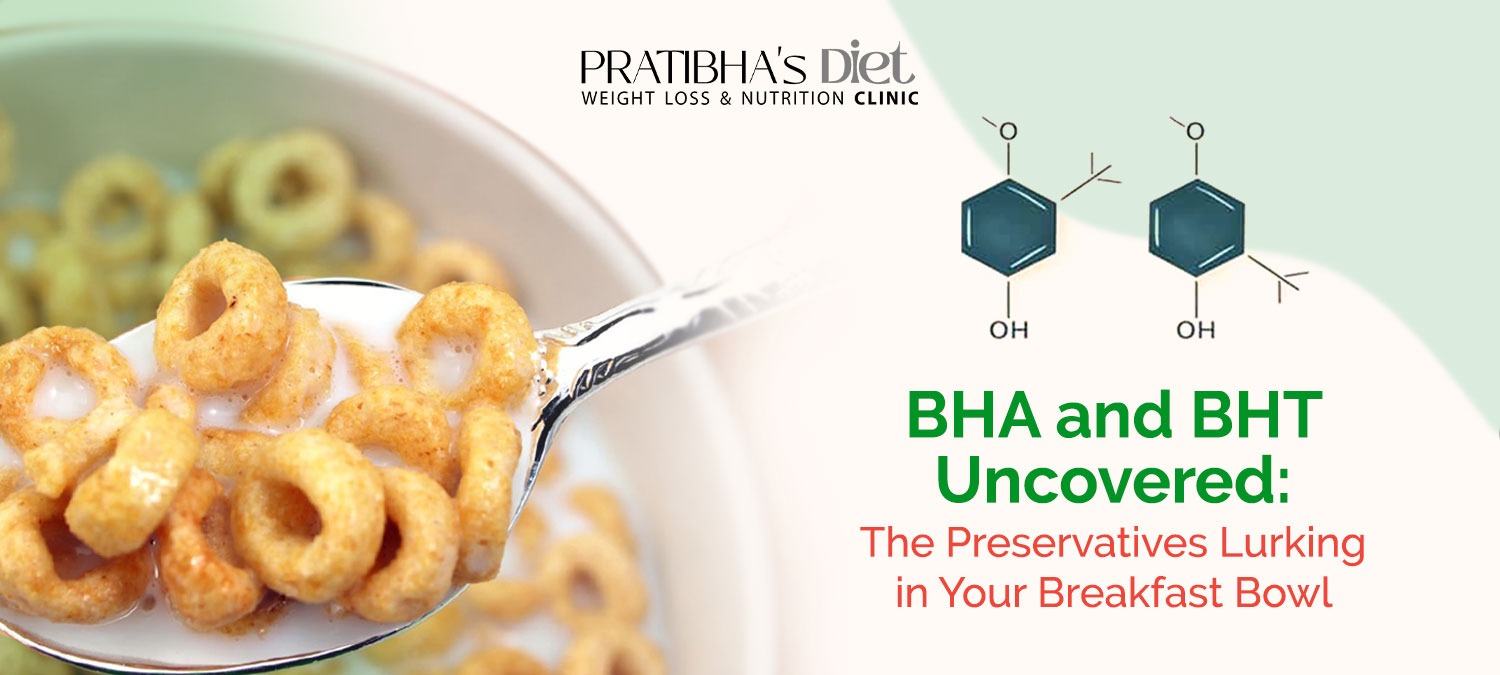
BHA and BHT Uncovered: The Preservatives Lurking in Your Breakfast Bowl
When you pour yourself a bowl of your favorite cereal or grab a quick breakfast bar on the go, the last thing on your mind is that you might be consuming harmful food additives. However, some of the most popular breakfast foods, particularly those marketed as “healthy” or “quick energy,” contain preservatives that have caused severe health concerns around the world.
Two of such preservatives are BHA (Butylated Hydroxyanisole) and BHT (Butylated Hydroxytoluene). While they can extend the shelf life of packaged foods, they have also been linked to potential health risks, leading to variations in their approval and use worldwide.
At Dt. Pratibha Mahajan’s Diet Clinic, we believe that a healthy lifestyle begins with understanding exactly what is in your food. Today, we’ll look at the hidden truths about BHA and BHT in cereal and why they can be more dangerous than you think.
What are BHA and BHT?
BHA and BHT are synthetic antioxidants that prevent fats and oils in foods from going rancid. This means keeping your cereal crisp and granola bars smelling fresh for months.
They’re found in:
- Breakfast cereals
- Instant oatmeal packets
- Breakfast bars and biscuits
- Pre-packaged baked goods
- Certain flavored instant teas
While they appear harmless at first glance, their chemical composition and long-term effects have sparked discussion among researchers and food safety officials.
Why are BHA and BHT Considered Harmful?
According to research, these additives may:
- Disrupt hormones and interfere with the body’s natural endocrine processes.
- Some animal studies have revealed that excessive doses of these substances could be carcinogenic (cancer-causing chemicals).
Contribute to chronic inflammation, which has been related to lifestyle disorders like obesity, diabetes and cardiovascular disease.
The problematic aspect is that these health problems don’t appear overnight. They accumulate over time through continuous, long-term intake, so even small amounts ingested daily, such as in your morning cereal, may have long-term implications.
Banned Food Additives: USA vs Japan
One of the most concerning aspects of BHA and BHT is that they are regulated differently across countries.
- Japan and several other nations have banned or severely restricted the use of BHA in food.
- The European Union permits very limited use, with rigid maximum limitations.
- In the United States, however, BHA and BHT are still permitted in numerous meals, including breakfast goods marketed for children.
This disparity demonstrates an essential truth: just because something is permitted in one place does not indicate it is safe for long-term consumption.
Preservatives in Breakfast Food: Why You Should Care
Breakfast is frequently referred to as the most essential meal of the day, but it is also one of the easiest meals to load with preservatives, particularly when it comes to packaged, ready-to-eat items.
When you begin your day with meals containing BHA and BHT, you are unintentionally providing your body with chemicals rather than clean energy. Over time, this may lead to:
- Sluggish metabolism
- Increased toxic load in the body.
- Nutritional inadequacies (because highly processed foods have less nutrient density)
How to Spot BHA and BHT in Your Food
Checking food labels is your first line of defence. Look for:
- “BHA” or “Butylated Hydroxyanisole”
- “BHT” or “Butylated Hydroxytoluene”
- Sometimes simply listed under “antioxidants (E320, E321)” in ingredient lists
How to Spot BHA and BHT in Your Food
The following are some healthier and safer substitutes for harmful preservatives found in breakfast foods:
- Instead of cereal that comes in a box with BHA or BHT, opt for homemade muesli or rolled oats with fresh fruit on top.
- Opt for whole-grain toast with natural nut butter instead of packaged morning biscuits.
- Instead of using flavoured quick oatmeal, opt for plain oats cooked with berries, nuts and cinnamon.
- Instead of using store-bought granola bars, prepare no-bake energy bites using dates, seeds and chocolate powder.
Why Diet Awareness is a Game-Changer
Being aware of harmful substances is only one aspect of the problem. Your regular diet becomes the cornerstone of your well-being. As a result, diet planning involves more than just calories; it also involves dietary quality.
Through customised diet programs, Dt. Pratibha Mahajan assists clients in identifying hidden sources of hazardous substances and developing nutrient-rich, lifestyle-appropriate meal plans free from preservatives.
If you’ve been unknowingly consuming BHA and BHT in cereal every day without realising it, changing your diet can be the best thing you can do for your body.